Journal
Korea vs Brazil for face surgery: two very different schools
Korea and Brazil are known for different things. See how body focus and face focus shape the eye and nose planning you may be offered.
 Claire Winslow
When people compare Korea and Brazil for surgery abroad, they are usually comparing reputations rather than results. Brazil is widely associated with body contouring. Korea is widely associated with the face, especially eyes, nose and jaw. A reputation is a starting hint, not a verdict on any single surgeon.
This guide is for readers who want a face procedure and are choosing where to look. It explains how a body focus and a face focus can shape what a consultation feels like, shows one face with two labeled examples, and ends with questions that work in either country.
1. What a body focus and a face focus can mean
A country’s reputation tends to follow demand. Where many patients ask for body work, clinics build experience, marketing and aftercare around it. Where many patients ask for face work, the same happens around the face. Neither is a quality ranking. It simply tells you what the average clinic spends most of its day doing.
What a face focus can look like in practice. In Seoul, consultations for eyes and nose often involve measured planning, standard photo sets, and a lot of conversation about proportion. Clinics that serve many international visitors usually offer interpreters and a regular pattern of follow ups before you fly home.
What a body focus can look like in practice. In Brazil, many surgeons are trained across a wide range of aesthetic work, and the culture around cosmetic surgery is open and well established. A surgeon there may be a strong face specialist, but you will often need to ask directly how much of their practice is the procedure you want.
The useful lesson is the same in both places. Ask what share of a surgeon’s work is eyes or nose, and ask to see results on faces that resemble yours.
2. Start from your own features
Before comparing countries, decide what you actually want to discuss. A face plan has three variables: what you start with, what you want to keep, and how large a change feels right.
Our model has a long oval face, a small straight nose, deep set pale blue eyes and very light brows. Those features are the starting point. A good plan respects them, and the point is to refine while keeping your features, not to replace them with a template from a different face.
Different traditions can lean toward different templates. A face focused school may offer a refined, slightly more defined look as a default. A body focused school may lean toward a more rounded, fuller overall result. Neither is wrong. What matters is that the template is yours, not the clinic’s.
3. A nose example
In the side view, our model has a small, straight nose with a soft, slightly rounded tip. The simulation below shows a clear change: a more refined, slightly lifted tip and a cleaner nose line, with the nostrils, lips and chin left as they are.
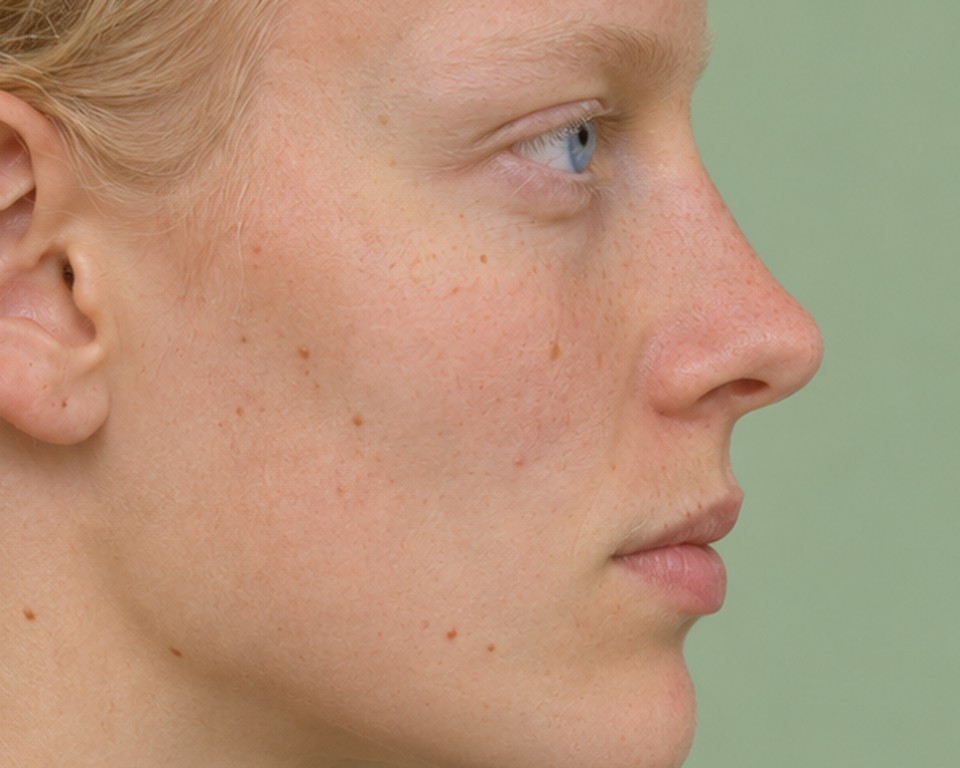
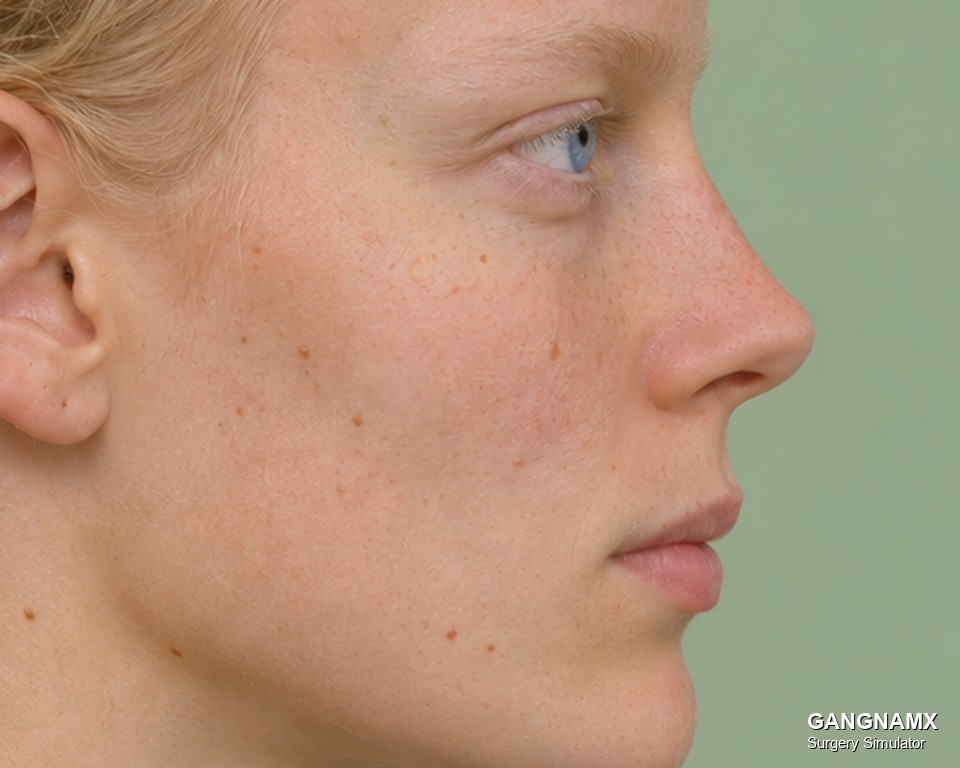
The change is visible but still natural. It shows how much of a result depends on restraint. A surgeon trained to deliver a very sculpted tip and a surgeon who prefers a softer one would plan this same nose differently, which is why you should see the plan before you commit.
4. An eye example
Our model has deep set eyes and very little visible upper lid, with pale lashes and brows that make the lid area read as quiet. The simulation adds a slim, soft crease so more lid becomes visible, while the eye shape and iris stay as they are.
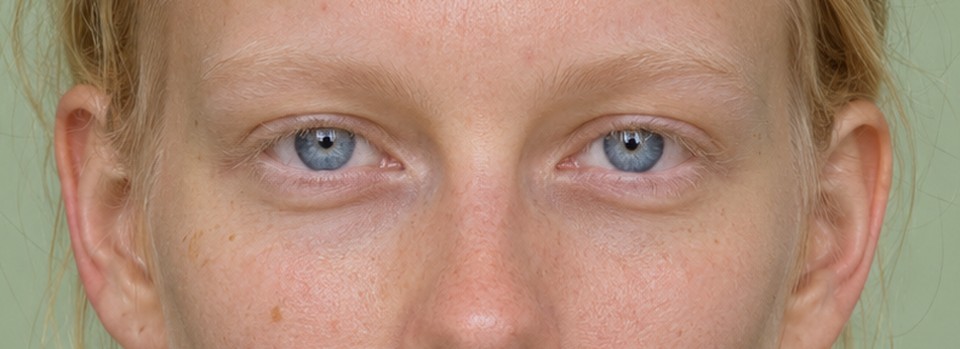
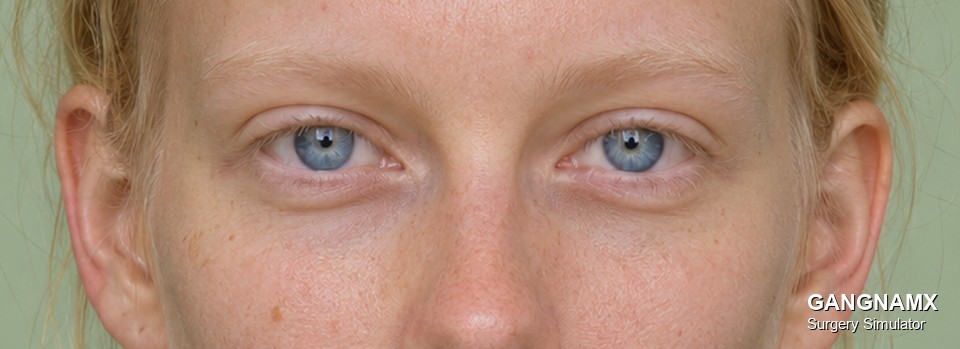
Eyelid work is a good test of any school’s approach. Some traditions have deep experience with crease design because many patients ask for it. For a face with deep set eyes and little lid, the questions are how much lid to reveal, how low to place the line, and whether the result still looks like this person.
5. Compare the two honestly
Use a short, fair framework rather than a ranking.
Experience with your procedure. How many eye or nose procedures does the surgeon do in a typical month, and on which kinds of faces? Fewer, more varied cases can still be excellent. You are looking for clear, specific answers.
Style fit. Look at the surgeon’s own before and after photos. Do the results share one recognizable look? If so, ask yourself whether that look suits you.
Language and communication. A consultation only works if you can describe what you want and understand the answers. Interpreters help, but you should be able to ask questions directly.
Aftercare and follow up. The first weeks matter. Ask where check ups happen, who handles questions after you fly home, and what happens if something looks wrong.
Travel and time. Flight length, time off and a realistic recovery period all affect the choice. Neither route is short for many readers, so plan the days, not just the procedure.
Regulation and credentials. Check the surgeon’s registration in that country and confirm the facility is licensed. Do this through official sources, not clinic marketing.
Remote consultations. Many surgeons in both countries offer a video or photo consultation first. Use it to compare how each one explains the plan. A surgeon who describes limits and alternatives clearly is giving you more than one who only describes the best case.
The honest conclusion is that the better choice depends on which surgeon and which plan, not on the flag. If you want eyes and nose and nothing else, a face focused clinic may offer more comparison material. If you want a broader plan, a wider specialist may fit. A doctor who examines you in person decides what is suitable, and no preview replaces that.
6. Questions to bring
- Focus: What proportion of your work is the procedure I am asking about?
- Plan: Can you show a labeled plan for my face, with a subtle and a stronger option?
- Fit: Can I see results on faces with features like mine?
- Alternatives: Is there a smaller step I should consider first?
- Risks and follow up: What risks apply, and who sees me after I go home?
Seeing a subtle and a stronger version on your own face before you travel turns these questions into comparisons you can judge.
Simulation images by GangnamX.
 Plastic Surgery SimulatorEvery option, first.EyesNoseJawlineStart simulating