Journal
A Hugh Jackman Jaw for Men: The Lower Face Options Compared
A strong male jaw is three zones: angle, chin shape and chin position. See the jaw angle simulated on one face and what to ask about the other two zones.
 Claire Winslow
The lower face has three zones, and men mix them up
A square, masculine jaw is not one thing. It is the angle where the jaw turns up toward the ear, the width and shape of the chin seen from the front, and the forward position of the chin seen from the side. Change one and the whole lower face reads differently, which is why a Hugh Jackman style jaw is so hard to copy from a single photo.
Jackman’s name has come back up in conversation this week, and his lower face is the usual reference for a strong, balanced male jaw. The description here is of appearance alone: a defined angle, a broad chin and a profile with a clear line under the lip. Our model keeps his own face throughout. We simulate the jaw angle on one face, and talk through the other two zones in words so you know what to ask about.
Our model’s starting point
Our model is a man in his early thirties, with dark hair, strong straight brows and a noticeable, well shaped nose. His lower face is the weak point. The jawline is soft and blends into the neck, the jaw angles under the ears are blunt and rounded, and there is a little fullness under the jaw. The chin is rounded and, in profile, sits clearly behind the lower lip, so the lower third looks short against the nose.
That mix is typical. Most men do not need a different jaw. They need one zone adjusted to match the other two, which is the reason to look at them separately.
Zone one: a sharper jaw angle
The jaw angle is the corner behind the cheek where the jawbone turns upward. A more defined angle gives the face a clearer outline and a stronger frame. In a clinic, this can be discussed through implants or filler placed over the bone angle, and the amount is a matter of the bone and the skin that covers it. For most men this is the change they picture first.
We show it from the side, where the angle is easiest to judge. In the simulation the jaw angle under the ear is sharp and clearly defined, and the jawline runs crisp and straight to the chin, separated from the neck. The nose, eyes and hair stay the same.
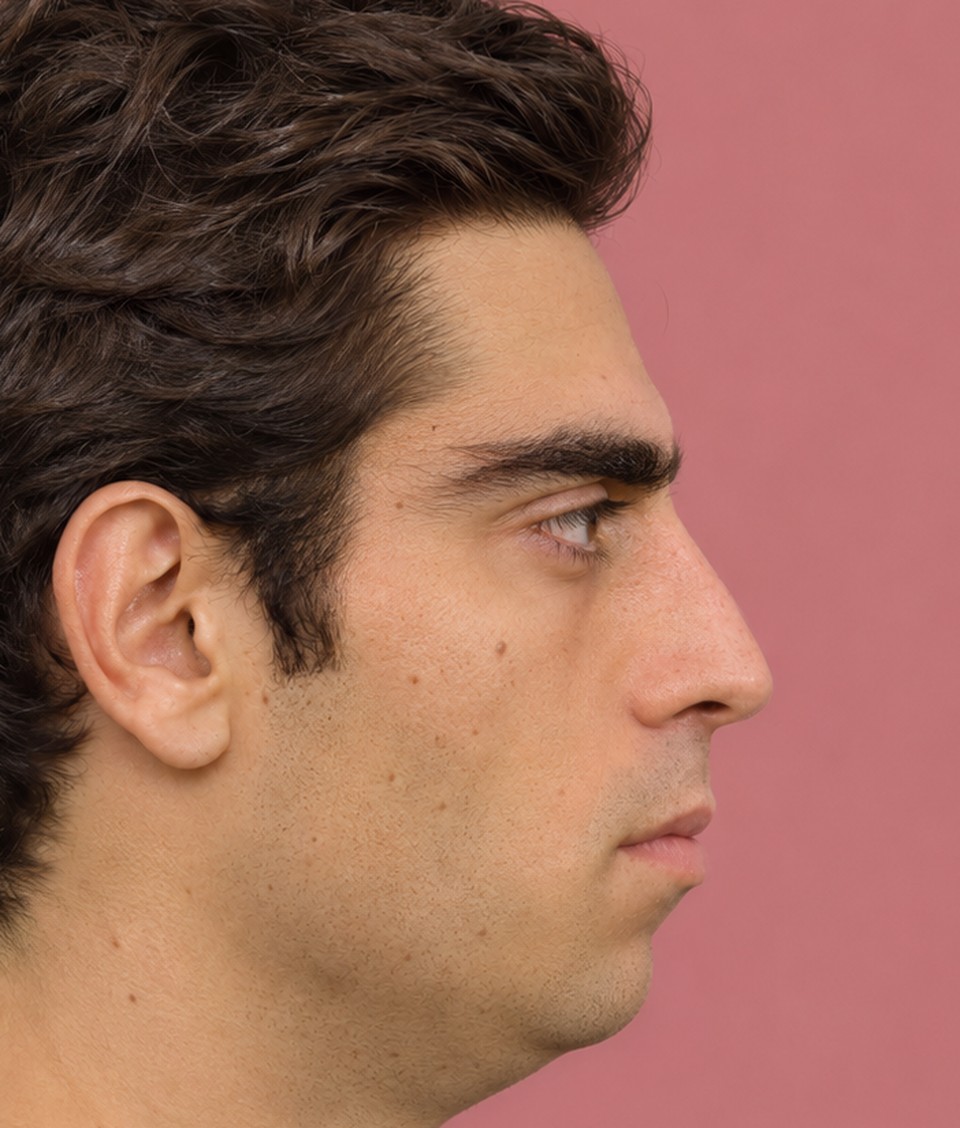
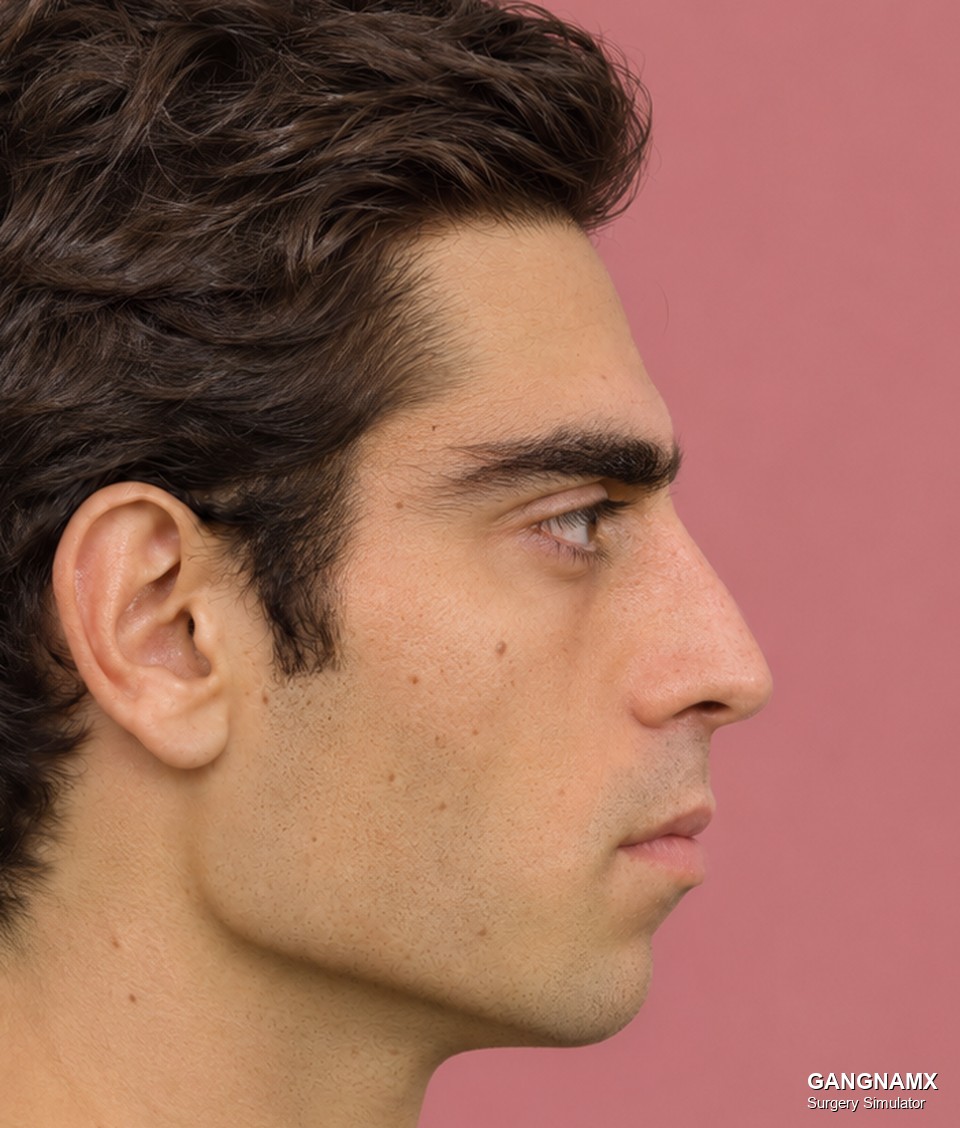
The change shows right away. The neck no longer melts into the jaw: a clear corner sits under the ear and a straight line runs from it to the chin. The face looks leaner, more masculine and still like the same man.
Zone two: the chin as a shape from the front
Seen from the front, the chin can be narrow, round, pointed or broad. A broader, squarer chin tends to match a strong jaw. A wider, flatter chin point finishes the lower outline, and it is worth asking how it would sit with your jaw angle.
The angle changes the frame, and the chin shape changes the finish in a smaller, quieter way. They add up differently, and you might want one without the other.
Zone three: how far the chin sits in profile
Zone three can only be judged from the side. A chin that sits further forward gives a clearer line under the lip and can make the lower face look longer and firmer.
This is often the zone that makes the most difference, and the front view alone would hide it. A man could add all the front changes above and still look recessed from the side.
Putting the three zones in order
If you could only pick one, which should it be? There is no universal answer, but there is a sensible way to think. Start with the zone that is visible from the widest range of angles. For many men that is the chin position, because the side view appears in every candid photo, every video call and every turn of the head.
The angle is next in value when the face is narrow and the jaw outline is faint. A sharper corner gives an otherwise lean face a frame. It matters less when the face is already wide at the base, since adding width there can tip the balance toward heavy.
The chin shape comes last, which surprises people. It is a finishing detail. A broader chin point makes sense after the other two zones are settled, because it should match what they have done and not lead it.
A few cautions apply to all three. A jaw that looks too wide can read as a mask. The skin and muscle over the bone differ from person to person, and they limit how much change looks natural. Facial hair, weight and age alter how a lower face looks, so a picture is a snapshot and not a promise. Finally, men often ask for the biggest version of whatever they see. A smaller step, viewed from three angles, usually tells you more.
What to ask a surgeon about the lower face
- Which zone limits my lower face: the angle, the chin shape or the chin position?
- Do you assess me from the front, the side and in motion?
- How would adding one zone change how the other two look?
- What would a smaller version of each change look like?
- How does the plan fit my bite, my neck and the way I smile?
- What are the risks, recovery steps and alternatives I should know about?
Simulation images by GangnamX.
 Plastic Surgery SimulatorEvery option, first.EyesNoseJawlineStart simulating