Journal
ILLIT Iroha's Soft Eye Look: A Delicate Crease, Simulated on One Face
ILLIT Iroha's soft, gentle eye look, and what a thin, delicate crease does on one monolid face, shown as a simulation.
 Claire Winslow
Pause on any close up of ILLIT’s Iroha and notice where your eye goes. It lands on a gentle, rounded look: a thin line above the lashes and eyes that feel light and calm, never sharp.
We describe appearance only, and our model is not being turned into Iroha. This guide moves one ordinary face toward that kind of softness with a single feature, the crease, and shows what it does and what it leaves alone.
A small detail in a close up
When someone says an eye looks “soft”, they usually mean there are no hard edges. No heavy shadow, no stern line, no tight angle. Softness is the absence of sharpness, and a thin, delicate line above the lashes is one of the places it comes from.
A good approach is to name the feature before you compare any pictures. That keeps a photo from getting credit for something it did not change. Here we show the crease only.
What makes an eye look soft
The crease is the fold above the lash line that shows when the eye is open. A thin one makes the lid look defined and gentle, while a thick or high one reads as bolder.
The point to hold on to is the word thin. Softness comes from a fine line that stays close to the lashes and follows the eye, not from a strong shadow.
The face we started with
Our model is a young Japanese woman of about 20, with long straight dark brown hair, soft bangs, a small oval face and soft thin brows. Her eyes are clearly monolids, with heavy, slightly puffy upper lids and no visible fold. The lid covers much of the lash line, so the eyes look small and flat in photos.
She is a clear example because the starting point is plain to see. Nothing needs to be imagined.
The crease: a thin, delicate line
In the first picture, a fine, natural line is drawn above the lashes and stays close to them. The heavy lid lifts, the eyes open wider and brighter, and the brows and the area under the eye are held in place.
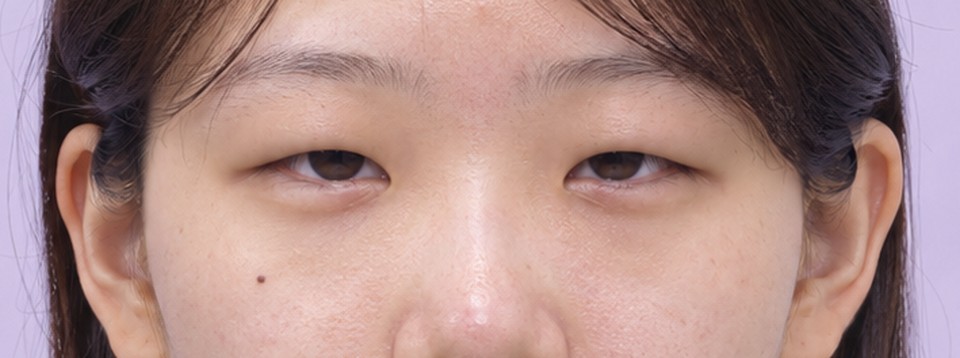
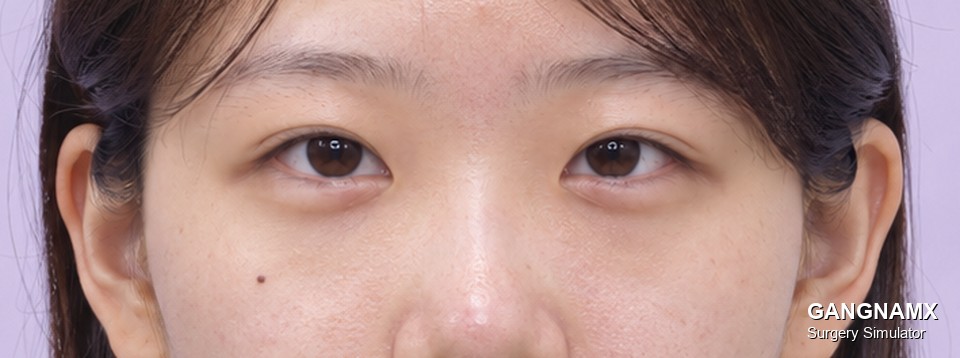
The lid gains a clear, delicate edge, the eyes open noticeably wider and look brighter, and the whole eye looks prettier and more finished. The crease adds definition. It does not change the eye into a different shape, and the face stays hers.
A close crop shows the line. The whole face shows what a viewer would actually see across a table, so here is the same change on the full face.
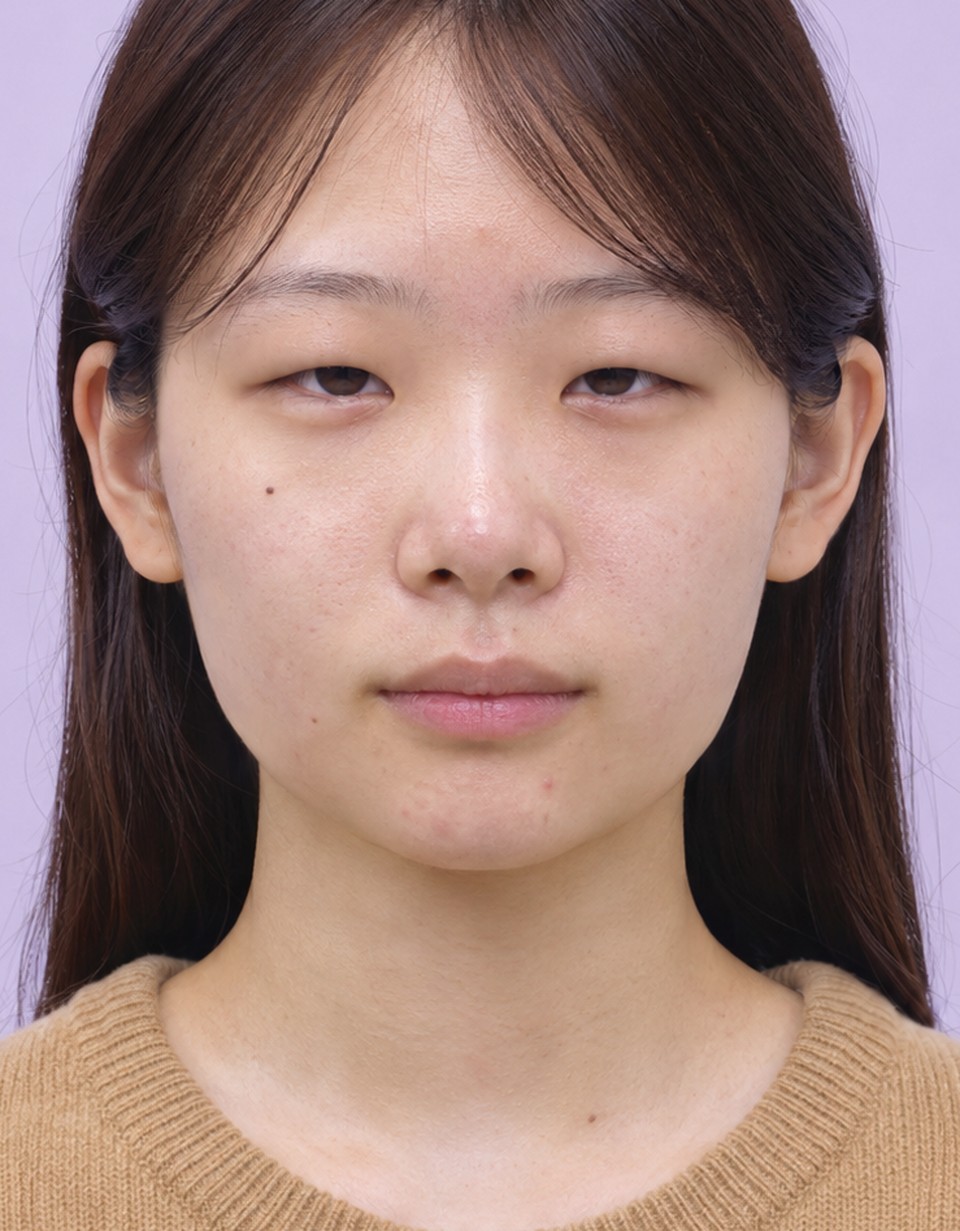
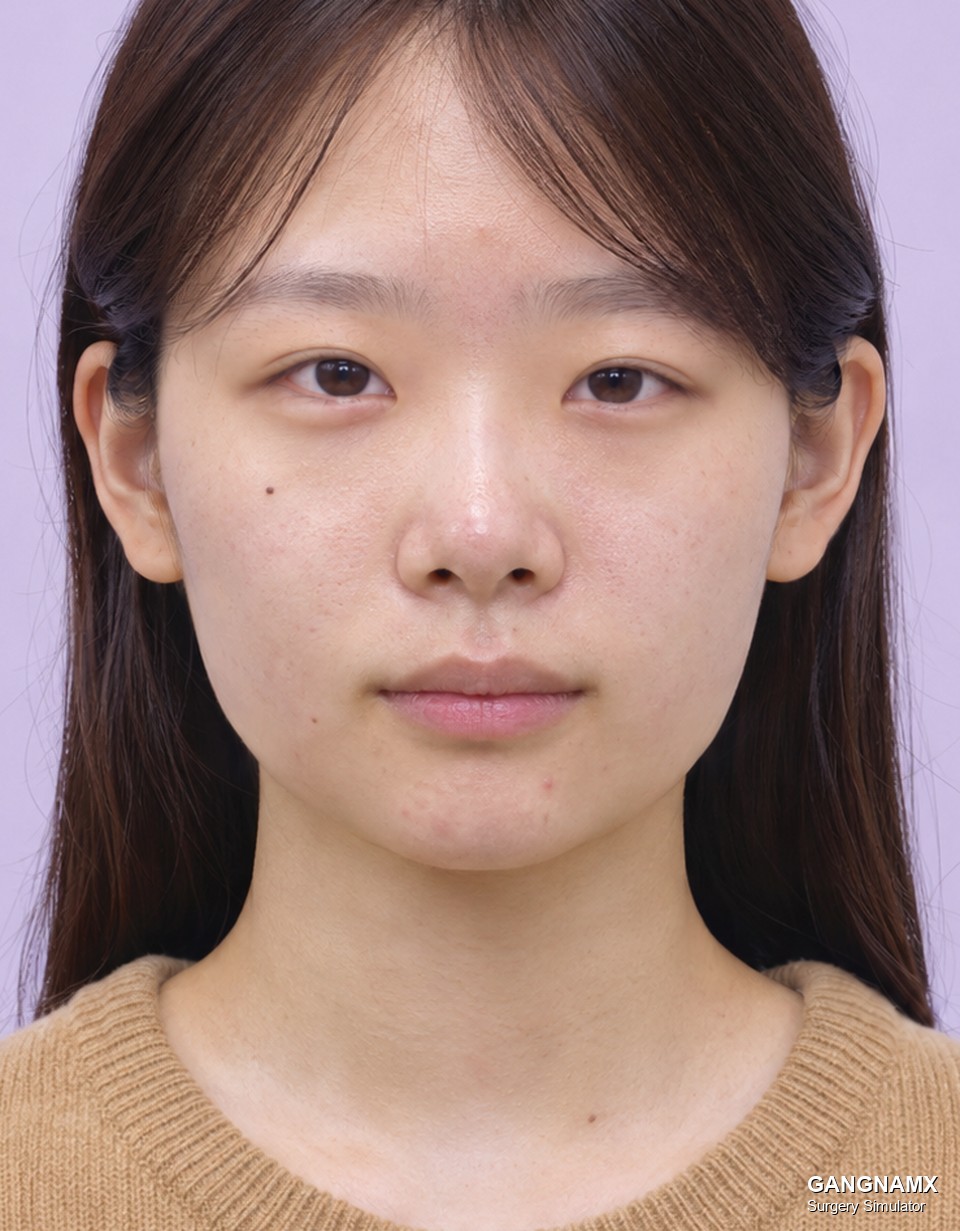
On the full face the eyes read as brighter and more awake, and nothing else seems to have moved.
Common questions
Which crease height is the soft one? A thin line kept close to the lash line is the gentle end of the idea.
Does it work on every face? No. The shape of the lid, the nose bridge and the skin all matter. Some faces suit a fine line, and others suit something different.
Does a simulation show how long a crease lasts? No. A preview shows shape only. Ask a specialist in person about how it would be done, healing, and what to expect over time.
Is this Iroha’s look? No. The simulation moves one face toward a kind of soft appearance and does not copy anyone.
Simulation images by GangnamX.
 Plastic Surgery SimulatorEvery option, first.EyesNoseJawlineStart simulating